 WhatsApp Now
Key takeaways: Dining management software tracks meal attendance, plans menus, and controls food cost. Most institutions go live in 5–7 days. It works best connected with hostel, inventory, and fee modules.
In this guide
What is dining management software?
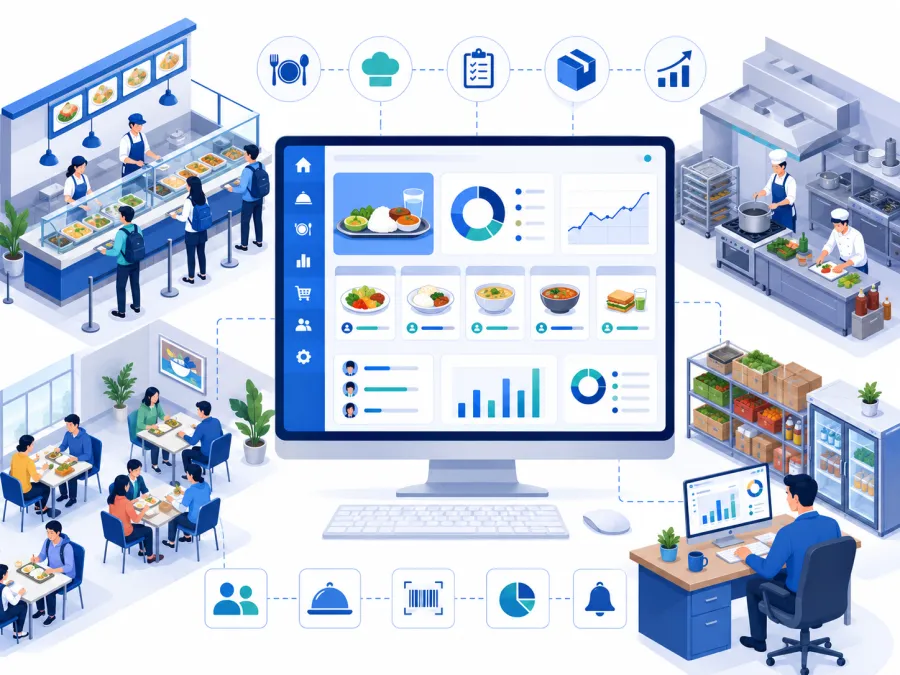
Dining management software is a digital system for running an institutional mess — meal attendance, menu planning, headcount forecasting, food cost, and wastage control — from one interface used by mess staff, wardens, and management.
Instead of guessing how many will eat and cooking accordingly, the kitchen sees real attendance and plans precisely. Meal counts link to residents and fees, and consumption links to the store, so food cost stops being a black box.
For schools, hostels, gurukuls, and ashrams feeding hundreds daily, even a small cut in over-preparation translates to meaningful monthly savings.
What changes when dining goes digital
Good dining software turns daily mess operations into a visible, cost-aware flow.
The real problems it solves
Here is what breaks down in a mess run on rough headcounts and memory.
Cooking blind
Kitchens over-prepare to be safe. Real attendance lets them cook for actual numbers.
Daily food wastage
Excess food is thrown away. Accurate counts cut over-preparation at the source.
Hidden food cost
Per-meal cost is unknown. Software ties consumption to cost per meal and day.
Ad-hoc menus
Last-minute menus disrupt purchasing. Menu planning aligns prep and store.
Untracked meal eligibility
Who is entitled to meals is unclear. Attendance links to residents and fees.
No dining data
Attendance, cost, and wastage become reports management can act on.
The pattern: Most messes cook for an assumed headcount with a safety margin. The margin becomes daily waste, and over a year, the cost of that waste dwarfs the cost of the software that would have prevented it.
Cooking for a rough headcount every day?
Share your daily meal count and resident numbers on WhatsApp. We will map the right DigiCampus dining workflow for you.
Key features to look for
Evaluate dining software against your real mess pattern — fixed residents, variable guests, and multiple meals a day.
Dining workflow from menu to report
This is the operating journey most institutions need from dining software.
- Meal attendance tracking record real attendance per meal session for accurate headcount.
- Menu planning plan weekly or cyclic menus aligned with purchases.
- Headcount forecasting cook for actual numbers instead of safety-margin estimates.
- Food cost tracking per-meal and per-day cost connected to store consumption.
- Wastage visibility spot over-preparation and reduce it systematically.
- Resident and fee links tie meal eligibility to hostel residents and dining fees.
- Guest and extra meals handle visitors and special meals cleanly.
- Reports and exports attendance, cost, and wastage reports for management.
Want to see dining on your mess?
We'll show meal attendance, menu planning, and food cost on a setup that matches you — in 20 minutes on WhatsApp.
Who needs dining management software
If you serve meals to more than 50 people daily, dining software protects food cost and cuts waste.
Residential schools
Boarding students with daily breakfast, lunch, and dinner counts.
Ashrams
Residents, students, and visitors with shared kitchen operations.
Gurukuls
Students living and dining on campus with fixed meal routines.
Temples and mutts
Prasad, annadanam, and bhandara meals at scale.
Colleges
Hostel mess feeding large, variable student numbers.
NGOs
Meal programmes and community kitchens needing cost control.
Rule of thumb: If your kitchen cooks 'a little extra to be safe' every day, that safety margin is measurable waste dining software can cut.
Headcount vs. software: a direct comparison
| Task | Manual / Paper | DigiCampus |
|---|---|---|
| Know how many will eat | Estimate with a safety margin | ✓ Real attendance per meal session |
| Plan the menu | Decide on the day | ✓ Planned weekly, aligned with store |
| Track food cost | Unknown per meal | ✓ Cost per meal and per day |
| Control wastage | Throw out the excess | ✓ Cook to actual count, waste falls |
| Handle guest meals | Rough additions | ✓ Logged and counted separately |
| Report to management | No data | ✓ Attendance and cost reports, export as PDF/Excel |
How to choose the right dining software
For institutional messes, prioritise practical fit:
What implementation actually looks like
Getting started is straightforward.
- Set up meals and menus — meal sessions, menu cycle, and resident list. A one-time setup.
- Import residents — from hostel or school records, with provider support.
- Define cost links — connect kitchen consumption to your store, if used.
- Train mess staff — a short walkthrough of marking attendance and menus.
- Go live — from the next week's meals.
At DigiCampus, most institutions are live within 5–7 working days of signing up. We handle resident import, menu setup, and mess-staff training before you go live.
Ready to cut food waste?
Tell us your daily meal count on WhatsApp. We'll confirm exactly what setup looks like for you — no commitment needed.
Common questions
What is dining management software used for?
It is used to track meal attendance, plan menus, control food cost, and reduce wastage in institutional mess and kitchen operations.
How does it reduce food wastage?
By recording real meal attendance, the kitchen cooks for actual headcount instead of estimates, cutting over-preparation and waste.
Does dining connect with hostel and inventory?
Yes. Meal attendance links to hostel residents and fees, and kitchen consumption connects with the inventory store.
See it on your campus
The best way to evaluate dining software is to see it track meal attendance and food cost on your own mess. A 20-minute walkthrough is enough to know whether it fits.